
 Study in Australia
 Study in USA
 Study in Canada
 Study in UK
 Study in New Zealand
The IELTS exam is crucial for those aspiring to study, work, or migrate to English-speaking countries. Among its components, the IELTS Reading section holds significant weight, often proving challenging for many test-takers. However, you can boost your performance and achieve a higher band score with the right strategies and techniques.
Whether you're taking the IELTS Academic or General Training exam, achieving the required band score is crucial for your application to study or work abroad. This means excelling in every aspect of the IELTS test, including the Reading section, which might initially appear straightforward - after all, it involves only reading and answering questions, doesn't it?
However, with its various text types, 40 questions, and 11 different task types, the IELTS Reading test demands reading speed and effective information retention and analysis. Given the significant implications of your performance, enhancing your reading speed is essential to maximize your chances of success on the test day.
In this article, we'll explore different techniques to increase your reading speed and achieve better scores on the Reading test.
Top 10 Tips For IELTS Preparation
Understanding the IELTS Reading Section
Before diving into specific strategies, it's essential to grasp the format and structure of the IELTS Reading section. This segment consists of 40 questions divided into three passages, each progressively more difficult. Test-takers are allotted 60 minutes to complete the entire section, which assesses their ability to understand academic texts, including skimming, scanning, and comprehension skills.
|
 Talk to an Expert
How to Improve IELTS Reading Band Score
Enhance Your Vocabulary:
Building a solid vocabulary is fundamental to excel in the IELTS Reading section. Familiarize yourself with academic and domain-specific terminology commonly found in the passages. Use resources like English vocabulary books, flashcards, and online platforms like Quizlet to expand your word bank. Additionally, practice using context clues to infer the meanings of unfamiliar words encountered during reading.
Develop Skimming and Scanning Techniques:
Time management is crucial in the IELTS Reading section, given the limited duration and content volume. Skimming involves quickly glancing through the passage to grasp its main idea and structure. On the other hand, scanning entails searching for specific information, such as names, dates, or keywords, within the text. By mastering these techniques, you can efficiently locate relevant details and answer questions more swiftly.
Practice Regularly with Timed Tests:
Consistent practice is vital to improving your performance in the IELTS Reading section. Allocate dedicated study sessions to complete timed reading tests under simulated exam conditions. Aim to replicate the testing environment as closely as possible, including strict adherence to time limits. This approach helps familiarize you with the exam format and enhances your speed and accuracy in answering questions.
Focus on Understanding the Passage Structure:
Understanding the organizational structure of passages can aid in navigating through complex texts more effectively. Pay attention to signal words and phrases that indicate relationships between ideas, such as cause and effect, comparison, or contrast. Identify key components such as topic sentences, supporting details, and concluding statements to discern the overall flow of the passage. This analytical approach facilitates comprehension and faster retrieval of information during the exam.
Utilize Practice Materials and Sample Tests:
Take advantage of the abundance of practice materials and sample tests available for the IELTS exam. Official IELTS preparation books, online resources, and mock tests offer invaluable opportunities to familiarize yourself with the question formats and assess your progress. Analyze your performance, identify areas of weakness, and focus on improving specific skills to achieve a higher band score.
Best IELTS Preparation Classes in Nepal
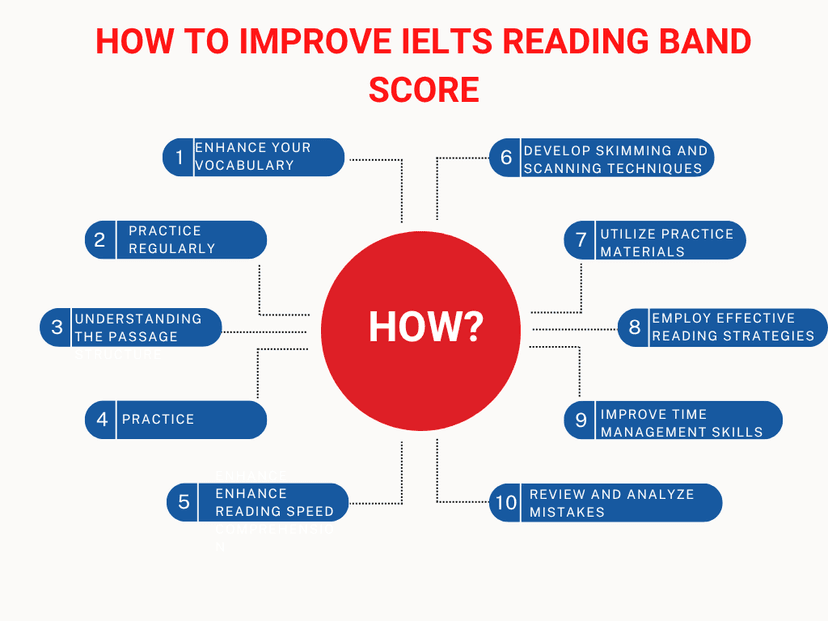
Employ Effective Reading Strategies:
Adopting strategic reading techniques can significantly enhance your comprehension and retention of information. For instance, previewing the questions before reading the passage allows you to identify the type of information you need to look for. Additionally, employ active reading strategies such as annotating the text, summarizing paragraphs, and making mental notes of key points. These strategies aid comprehension and facilitate quicker retrieval of information when answering questions.
Practice Skimming for the Main Idea:
In many IELTS Reading passages, the main idea or central theme is often presented in the introductory paragraph or prominently reiterated throughout the text. Practice skimming techniques to quickly identify the main idea, central argument, or overarching theme of each passage. This enables you to grasp the core content and better contextualize the details presented in the subsequent paragraphs.
Improve Time Management Skills:
Effective time management is critical to maximizing your score in the IELTS Reading section. Allocate a specific amount of time for each passage and stick to it rigorously. If you encounter challenging questions, don't dwell on them excessively; mark them for review and move on to the next ones. Prioritize tackling easier questions first to ensure you secure as many points as possible within the allotted time frame.
Enhance Reading Speed and Comprehension:
Improving your reading speed without compromising comprehension is essential for success in the IELTS Reading section. Regularly practice reading across various genres and topics to enhance your reading fluency and comprehension skills. Experiment with techniques such as chunking, which involves grouping words or phrases for faster processing. Additionally, aim to increase your reading stamina by gradually extending the duration of your reading sessions.
Review and Analyze Mistakes:
After completing practice tests or mock exams, take the time to review your answers and analyze any mistakes made. Identify the types of questions or passages you struggled with and the reasons behind your errors. Pay attention to recurring patterns or misconceptions and strive to address them through targeted practice and revision. Learning from your mistakes is crucial for continuous improvement and maximizing your performance on exam day.