



In today's fast-paced and data-driven business landscape, organizations increasingly rely on data-driven insights to make informed decisions across all departments, including human resources (HR). HR analytics, also known as people analytics, has emerged as a crucial tool for HR professionals to leverage data in understanding, managing, and optimizing various aspects of the workforce.
As the demand for HR analytics expertise grows, HR professionals and aspiring data enthusiasts seek comprehensive courses to equip themselves with the necessary skills and knowledge.
This article delves into HR analytics courses, exploring their significance, content, and benefits.
Understanding HR Analytics
HR analytics involves systematically analyzing HR data to derive actionable insights that drive better decision-making and improve organizational performance. By leveraging various analytical techniques, such as predictive modeling, data mining, and machine learning, HR professionals can uncover patterns, trends, and correlations within workforce data. These insights enable organizations to optimize recruitment processes, enhance employee engagement, reduce turnover, and align HR strategies with business objectives.
Data Science vs Machine Learning
The Significance of HR Analytics Courses
HR analytics is not merely a buzzword; it's a strategic imperative for organizations looking to thrive in today's competitive environment. As the demand for HR analytics talent continues to rise, there's a pressing need for professionals with the requisite skills to harness the power of data in HR decision-making. HR analytics courses address this demand by equipping individuals with the knowledge, tools, and techniques needed to excel in this field. Whether you're an HR professional looking to upskill or a data enthusiast aspiring to specialize in HR analytics, enrolling in a comprehensive HR analytics course can significantly enhance your career prospects.
Top 10 Affordable Countries to Study Data Science
Key Components of HR Analytics Courses
A well-designed HR analytics course covers various topics and methodologies for understanding and applying analytics in HR contexts. Some key components typically included in HR analytics courses are:
- Fundamentals of HR Analytics: An overview of HR analytics concepts, methods, and applications.
- Data Management and Analysis: Techniques for collecting, cleaning, and analyzing HR data, including data visualization and statistical analysis.
- Predictive Modeling: Introduction to predictive analytics techniques for forecasting workforce trends, attrition, and performance.
- Employee Engagement and Retention Analytics: Strategies for measuring and improving employee engagement, satisfaction, and retention.
- Recruitment Analytics: Approaches to optimizing recruitment processes, including sourcing strategies, candidate assessment, and talent acquisition analytics.
- Diversity and Inclusion Analytics: Understanding the role of analytics in promoting diversity, equity, and inclusion within the workforce.
- HR Metrics and KPIs: Identifying and measuring key HR metrics and performance indicators aligned with organizational goals.
- Case Studies and Practical Applications: Real-world case studies and hands-on projects to apply HR analytics concepts in solving business challenges.
|
 Talk to an Expert
Bachelor of Artificial Intelligence and Machine Learning
Benefits of Pursuing an HR Analytics Course
Investing in an HR analytics course offers numerous benefits for both individuals and organizations:
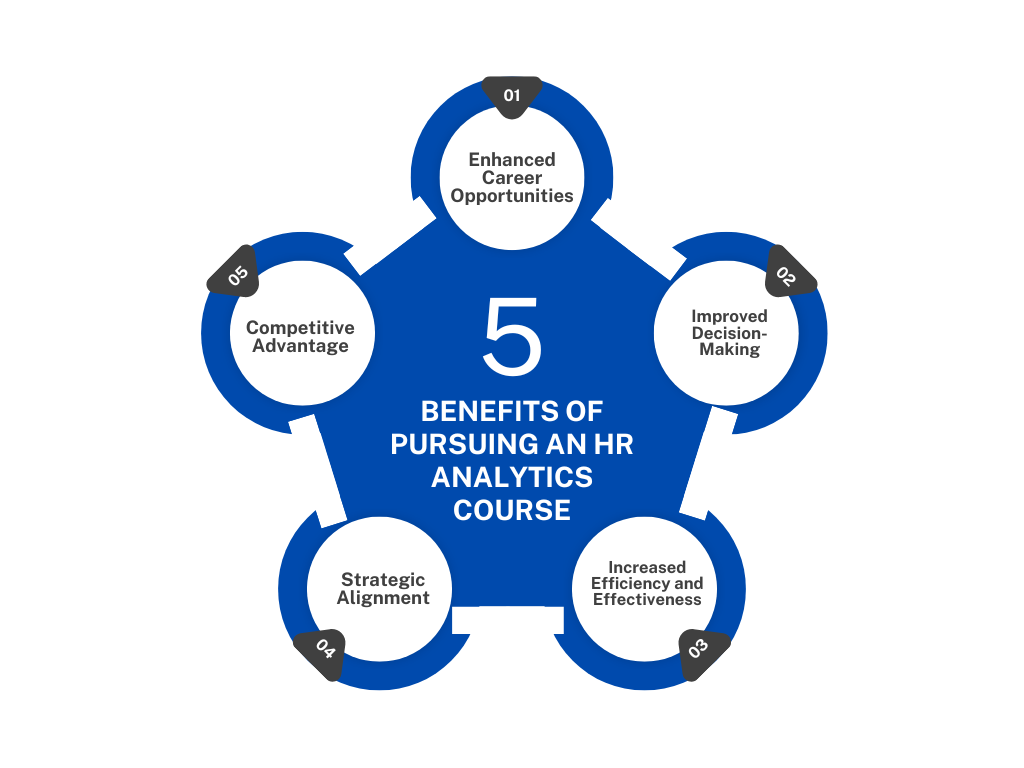
Enhanced Career Opportunities:
Acquiring expertise in HR analytics can open doors to various career opportunities, including HR analyst, data scientist, HR manager, and consultant roles.
Improved Decision-Making:
By leveraging data-driven insights, HR professionals can make more informed decisions regarding recruitment, talent management, performance evaluation, and organizational development.
Increased Efficiency and Effectiveness:
HR analytics enables organizations to streamline HR processes, identify areas for improvement, and allocate resources more effectively, leading to enhanced operational efficiency.
Strategic Alignment:
Aligning HR strategies with business objectives is essential for organizational success. HR analytics provides the tools to measure HR's impact on business outcomes and adjust strategies accordingly.
Competitive Advantage:
Organizations that leverage HR analytics effectively gain a competitive edge by attracting top talent, optimizing workforce performance, and fostering a culture of continuous improvement.


