



Interior design is a dynamic industry that offers immense opportunities for those with the right skills and mindset. According to market research, the global interior design services market is poised to grow by $23.15 billion between now and 2024, a profitable prospect for aspiring designers.
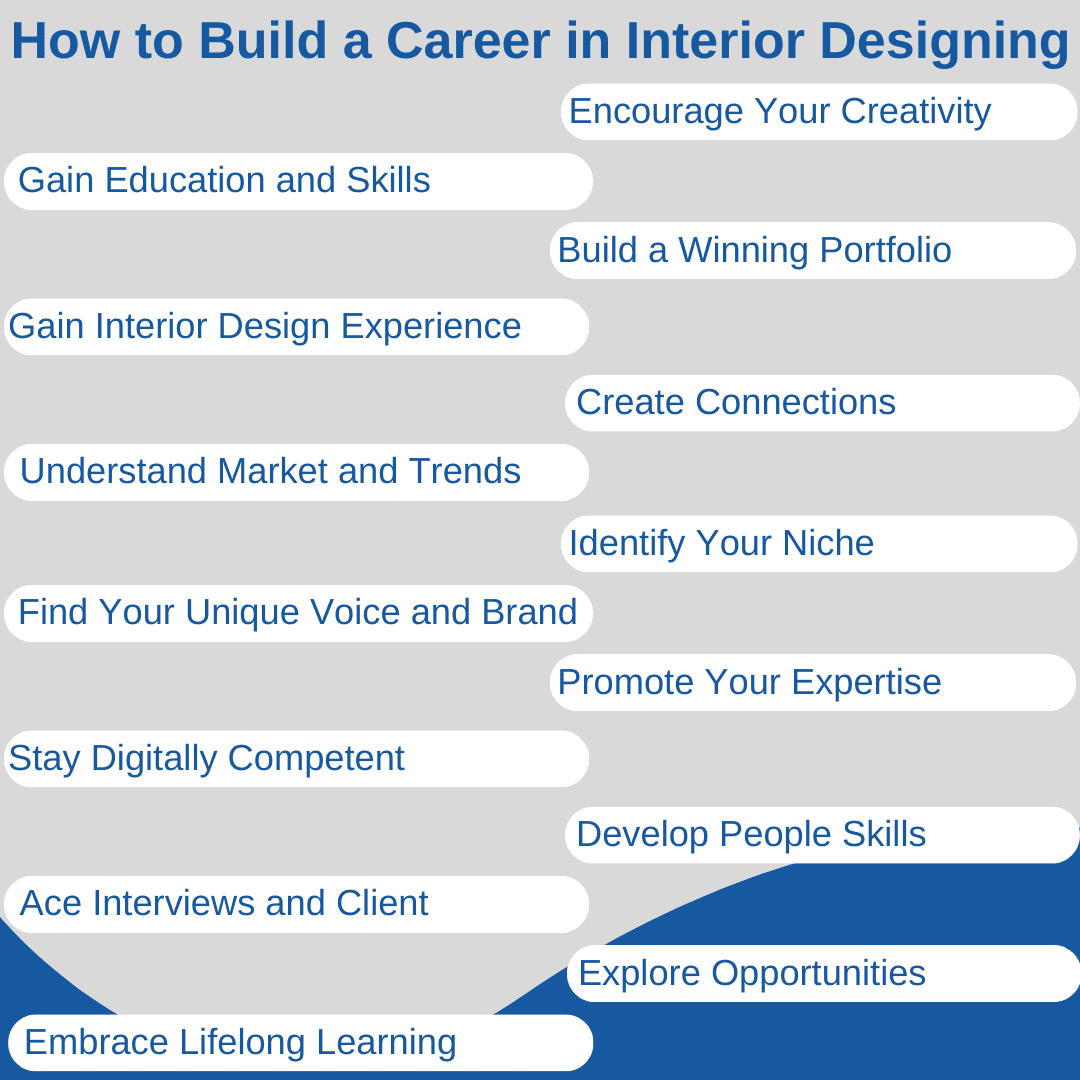
However, becoming an interior designer requires more than just an aesthetic flair. It's a profession that demands a blend of technical knowledge, creative vision, and people skills. This article will explore the 14 steps you must follow to transform your passion for design into a successful and fulfilling career.
Read More: Bachelor of Interior Design
Encourage Your Creativity
Interior design is a highly creative field that requires visualising and transforming spaces. To become a successful interior designer, you need to nurture your creativity. This can be achieved by exploring different creative hobbies like fashion, art, and jewellery design, which can broaden your thinking and find inspiration. Keeping a visual diary is also essential, as it allows you to record design ideas, both successful and unsuccessful, serving as a valuable reference for future projects.
Gain the Necessary Education and Skills
Interior design is a professional field that requires specific knowledge and expertise. To master the tools and techniques of interior design, you should pursue a formal education, such as an interior design course or a degree in interior design. This will help you acquire skills in space planning, colour theory, lighting, materials, and furniture design. Additionally, you will need to develop competencies in creative thinking, problem-solving, project management, and client management.
Build a Winning Portfolio
Your portfolio is your passport to the design world. To create a strong portfolio, let your design vision and values shine through, even if showcasing different interior styles and projects. Seeking honest feedback from others is crucial to refine your portfolio and make it a positive reflection of your abilities. You can present your portfolio in a digital or physical format that effectively showcases your work and personality.
Gain Interior Design Experience
Hands-on experience is crucial for aspiring interior designers. You can gain experience by redecorating your own home as a design challenge, offering free design services to friends or in your community, and applying for internships or seeking opportunities to shadow an established designer. These experiences will help you create contacts, learn on the ground, and slowly build your reputation.
Create Connections
Networking and building relationships are essential for finding interior design jobs and gaining new clients. You can create connections by joining professional associations and attending industry events, engaging with people online through platforms like LinkedIn, reaching out to influencers, and building a network of suppliers and partners.
You Might Also Like: Bachelor of Interior Design in Australia
Understand the Market and Trends
To stay relevant and in demand, you must understand the interior design market and keep up with industry trends. This includes researching the local and global market conditions, such as construction and development trends, and staying informed about emerging design trends, sustainable and ethical practices, and changes in materials and technologies. Subscribing to industry newsletters, following influential designers, and reading design magazines can help you stay up-to-date with the latest developments in the field.
Identify Your Niche
Positioning yourself as an expert in a specific area can help you stand out in the competitive interior design market. This could involve focusing on a preferred design style, such as Victorian renovations or Scandinavian minimalism, targeting a specific clientele, such as residential, commercial, or hospitality spaces, or choosing a preferred work environment, such as an agency, in-house design, or independent practice.
Find Your Unique Voice and Brand
A strong brand identity will help you differentiate yourself and connect with your target clients. This includes defining your brand personality, tone of voice, and visual branding elements, ensuring your branding aligns with your positioning and the clients you want to work with, and showcasing your brand and design work through social media, a professional website, and other marketing channels.
Promote Your Expertise
Effective self-promotion is crucial for building a successful interior design career. Strategies include actively sharing your work and design insights on social media platforms, contributing to industry publications or blogs as an expert, and entering and promoting your participation in design competitions and awards.
Stay Digitally Competent
Proficiency in industry-standard design software and digital tools can enhance productivity and professional presentation. Focus on learning computer-aided design (CAD) software like AutoCAD and SketchUp and presentation and visualisation tools like Adobe Creative Cloud.
|
 Talk to an Expert
Develop People Skills
Interior design is as much about understanding people's needs and preferences as aesthetics. Cultivate your ability to communicate effectively with clients, listen to their requirements, and manage their expectations. Additionally, I learned to work collaboratively with various professionals, including suppliers, project managers, and other designers.
Ace Interviews and Client Presentations
When presenting your design skills and vision, being confident, professional, and passionate is essential. Prepare thoroughly with research, ideas, and recommendations tailored to the client or employer, and be comfortable with constructive feedback and critiques of your work.
Explore Collaborative Opportunities
Partnering with other designers, artists, or industry professionals can strengthen your brand positioning, establish your expertise, expose you to new audiences and opportunities, and provide a platform for unique and innovative design solutions.
Embrace Lifelong Learning
To stay ahead in the constantly evolving interior design industry, you should continuously learn and improve your skills through formal education or self-directed study. Diversify your specialisations, explore new design trends and technologies, and pursue professional development opportunities to advance your career.
By following these steps, you can build a successful and fulfilling career in the exciting field of interior design.
FAQs
What education do I need to become an interior designer?
A formal education, such as an interior design course or degree, is recommended to acquire technical skills and knowledge in space planning, colour theory, and furniture design. This also helps develop crucial creative thinking, problem-solving, and client management competencies.
How do I build a strong portfolio?
Focus on creating a portfolio that showcases your design vision and personality. Seek feedback to refine it, and present your work in a digital or physical format that makes a positive impression.
How can I gain experience as a beginner?
Redecorate your home, offer free design services to friends or your community, and pursue internships or shadowing opportunities to build your portfolio and acquire practical knowledge.
What self-promotion strategies should I use?
Actively share your work on social media, contribute to industry publications, and enter design competitions to raise your profile and establish your expertise.
How do I stay up-to-date on industry trends?
Research local and global market conditions, keep informed about emerging design trends and sustainable practices and subscribe to industry newsletters and magazines.


